Inside the Hilton Diagonal Mar: What a World-Class MICE Site Inspection Really Looks Like
- Posted by Esei
- Date 24 de April de 2026
Not all site inspections are created equal. The traditional approach, walking through a venue with a floor plan and a checklist, has its place. But the hospitality industry is moving in a different direction, one that puts the client’s experience at the centre of everything from the very first visit.
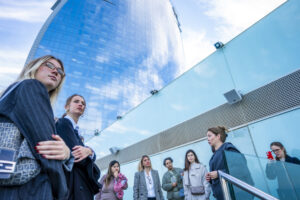
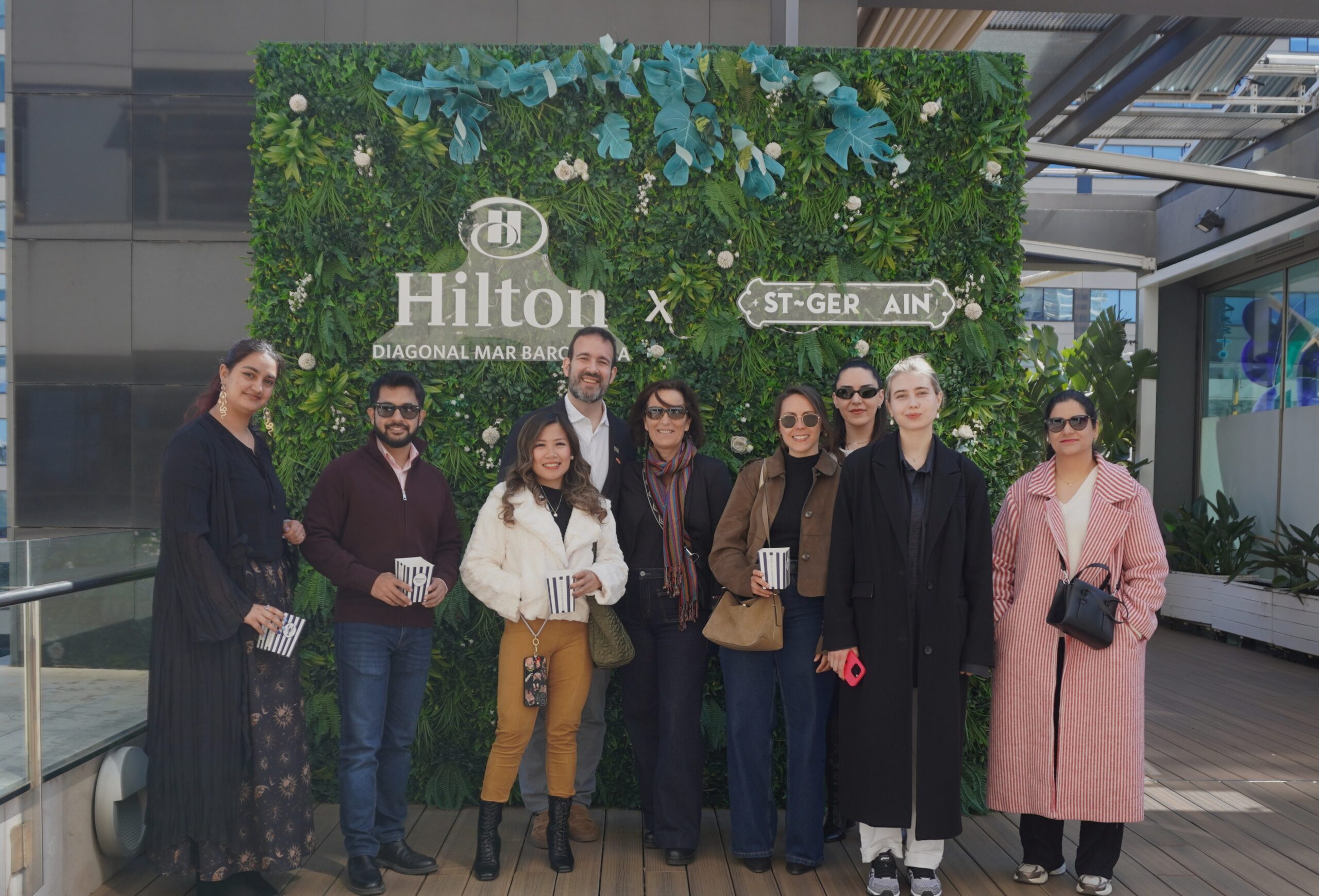
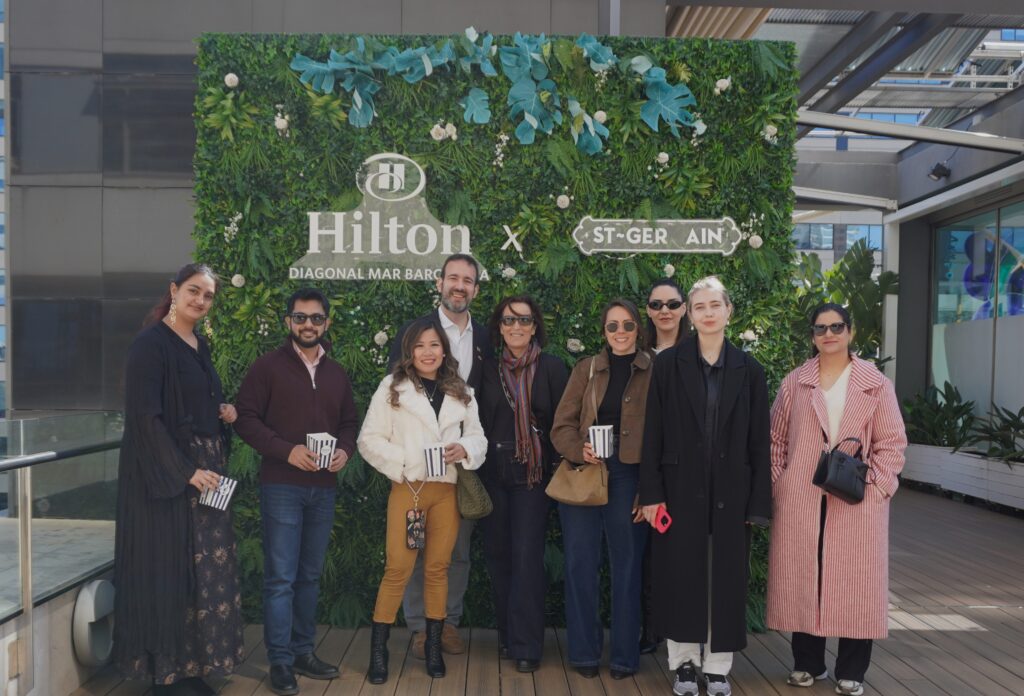
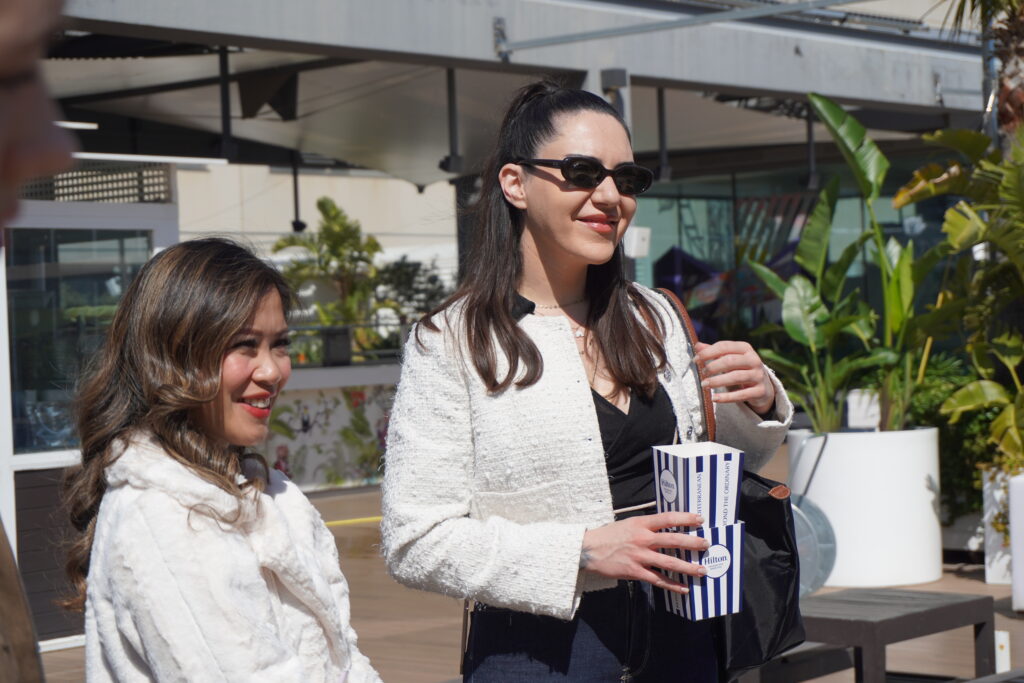
Students on ESEI’s Master in Tourism and Hospitality Management got to see that evolution first-hand, as part of the Events and MICE Management course led by Professor Elena Altemir. The learning walk took them to Hilton Diagonal Mar, one of Barcelona’s leading international hotel brands for corporate and associative events, where the visit was led by Edgar Pereira, Director of Sales at the property.
What made it distinctive was the format. Rather than a standard tour, the visit was structured around Hilton’s Showtime concept, a client-centred approach to site inspections that has redefined how the hotel introduces itself to potential event clients.
What Is the Showtime Concept?
The Showtime methodology reflects a fundamental shift in how high-end hospitality brands approach the site inspection. Rather than walking a client through spaces and reciting capacities, Hilton designs the visit itself as an experience, one that is tailored to the individual client before they ever walk through the door.
Prior to the visit, students shared personal profiles including dietary preferences, interests and expectations. The hotel used that information to shape the visit around them, demonstrating in real time how the same approach is used with corporate clients to create personalised, memorable first impressions.
For students studying event management, the lesson was immediate and practical: the site inspection is not just a chance to show a venue. It is an opportunity to begin building a client relationship, and the most sophisticated operators treat it as such.
A Comparative Perspective on the MICE Sector
The visit to Hilton Diagonal Mar was designed to complement the earlier learning walk to the Meliá properties, giving students the opportunity to compare how a national hospitality brand and a global international chain each approach the MICE market.
The contrast is instructive. Both operate at a high level, but with different commercial frameworks, different client profiles, and different organisational structures behind the scenes. Understanding those differences, and being able to articulate them, is exactly the kind of nuanced knowledge that sets strong candidates apart in the hospitality industry.
Seeing the Technical Side Through a Professional Lens
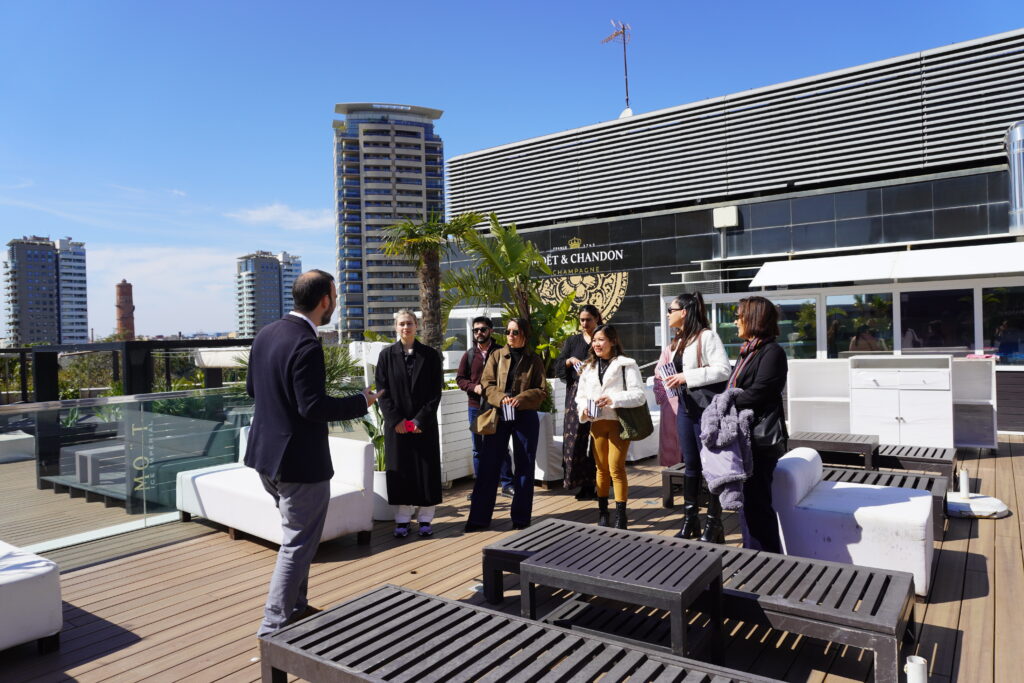
Alongside the experiential elements of the visit, students also conducted a thorough technical review of the hotel’s event infrastructure. Meeting spaces, room capacities, layout configurations, audiovisual specifications and operational logistics were all examined through the lens of what a corporate or associative event planner would need to know.
This is the detail work that underpins every successful event proposal. Knowing what questions to ask, what data to capture, and how to assess whether a venue’s technical capabilities match a client’s requirements are skills that students were putting into practice in a real environment rather than a simulated one.
Food and Beverage as Part of the Event Experience
One of the more memorable elements of the visit was a light lunch hosted by the hotel, which served a dual purpose. On one level, it was a natural moment of hospitality. On another, it was a deliberate illustration of how food and beverage functions within the broader event experience.
In the MICE sector, catering is not simply a practical requirement. It is part of how a venue communicates its quality and attention to detail, and how clients begin to form a sense of what their own guests will experience. Observing that service delivery from a professional standpoint, rather than simply enjoying the food, gave students a different kind of insight into hospitality operations.
Learning From Industry Leadership
The visit also included a conversation with Edgar Pereira, Director of Sales at Hilton Diagonal Mar, who spoke openly about commercial strategy, client relationship management, and the decision-making processes behind running a MICE-focused operation within a global hotel brand.
Hearing that perspective directly from someone operating at that level adds a dimension that no case study can replicate. Students were able to ask questions, explore the realities of the role, and begin to understand what a career in hotel sales and events actually looks like from the inside.
The visit also introduced students to SITE, the Society for Incentive Travel Excellence, one of the most significant professional associations in the incentive travel sector. This introduction came through the perspective of the incoming President of SITE Spain and Portugal for 2026, adding an industry leadership dimension to what was already a rich professional encounter.
Understanding Career Opportunities in Hospitality
One of the practical outcomes of the visit was a broader understanding of the range of career paths available within an international hotel brand. From sales and events coordination to operations management, marketing and client relations, properties like Hilton Diagonal Mar employ professionals across a wide spectrum of functions.
For students considering their options after graduation, that visibility matters. The hospitality sector offers more entry points and more variety than it is sometimes given credit for, and visits like this one help students see the full picture rather than assuming there is only one route in.
Building a Professional Framework Through Real Visits
ESEI’s approach to the Master in Tourism and Hospitality Management is built on the principle that industry exposure is not an addition to the curriculum but a core part of it. The learning walk to Hilton Diagonal Mar, like the earlier visit to the Catalunya Congress Centre and Torre Melina, gives students a professional framework built from real experiences in real venues.
By the time they graduate, they will not just understand the theory of MICE event management. They will have stood in the spaces where it happens, spoken with the people who make decisions, and developed a working knowledge of how the industry actually operates.
That is the kind of preparation that counts when you are sitting across the table from your first client.
Explore ESEI’s Programmes
👉 If you’re considering starting your own journey in Barcelona, explore ESEI’s Short Courses, Bachelor’s and Master’s and MBA programmes and see how we can support you on your study abroad journey.

Why Barcelona Is the Best City to Study Tourism and Hospitality Management
You may also like

How to Get an Internship in the Hospitality Industry in Barcelona

How to Choose a Master’s in Tourism and Hospitality Management