
How to Choose a Master’s in Tourism and Hospitality Management
- Posted by Esei
- Date 25 de May de 2026

A Master’s in Tourism and Hospitality Management is one of the most practical and career-focused postgraduate qualifications you can pursue. Whether you are looking to move into hotel management, event planning, destination marketing, the MICE sector or tourism strategy, the right programme can open doors across the globe.
But with so many options available, choosing where and what to study is not always straightforward. Here is a practical guide to help you make the right decision.
What Can You Do With a Master’s in Tourism and Hospitality Management?
Before choosing a programme, it helps to understand where the qualification can take you.
Graduates from hospitality and tourism master’s programmes work across a wide range of sectors and roles. Hotel and resort management, revenue management, event and MICE management, destination management organisations, tourism boards, luxury brand management, food and beverage operations, corporate travel, and hospitality consultancy are all common career paths.
The global nature of the hospitality and tourism industry also means that a strong master’s qualification, combined with international study experience, is genuinely portable. You are not limited to working in the country where you studied.
What to Look for in a Hospitality and Tourism Master’s Programme
Not all programmes are the same. When comparing your options, here are the factors that matter most.
Curriculum and specialisation. Look at the modules on offer and check whether they reflect the direction you want to take your career. A good programme should cover both the business foundations of hospitality — finance, marketing, operations, strategy — and the specialist knowledge of the industry, including event management, revenue management, MICE, sustainable tourism and destination management.
Industry connections and practical learning. The hospitality and tourism industry is built on relationships and real-world experience. Programmes that incorporate industry visits, guest speakers, live projects and internship opportunities will prepare you far better than those that rely solely on academic theory. Ask prospective schools how they connect students with the industry during the programme, not just after graduation.
Faculty experience. Are the professors teaching from their own current or recent industry experience, or primarily from an academic background? In a field as operationally specific as hospitality and tourism, having professors who have worked at the highest levels of the industry makes a significant difference to the quality of the learning.
Location. Where you study matters in hospitality and tourism more than in almost any other field, because the industry itself is so closely tied to place. Studying in a major tourism destination or a city with a strong hospitality and events sector gives you access to industry professionals, real venues and live experiences that a programme in a less relevant location cannot replicate.
Programme accreditation and recognition. Check that the institution is accredited and that its qualifications are recognised within the European Higher Education Area, particularly if you plan to work or seek further qualifications in Europe.
Student community. Hospitality and tourism is an international industry. Studying alongside students from diverse backgrounds and nationalities builds the cross-cultural fluency and global network that the industry demands.
Why Barcelona Is One of the Best Cities to Study Hospitality and Tourism
Choosing Barcelona as your study destination adds a dimension to your education that few other cities can offer.
Barcelona consistently ranks among the top tourist destinations in Europe, welcoming millions of visitors each year from across the world. The city is home to some of Europe’s most prestigious hotel brands, a world-class MICE infrastructure, Michelin-starred restaurants, major international events and a destination management industry that operates at the highest level.
Studying here means studying inside the industry, not observing it from a distance. The venues you visit, the professionals you meet, and the events ecosystem you are immersed in are all part of your education in a way that a classroom-only programme cannot provide.
What to Expect From ESEI’s Master in Tourism and Hospitality Management
The Master in Tourism and Hospitality Management at ESEI is built around the principle that the best way to learn hospitality is to experience it.
The programme is structured around project-based learning, meaning students spend their time working on real challenges for real organisations rather than completing purely theoretical coursework. Every module is connected to practical application, and students build a portfolio of genuine professional experience before they graduate.
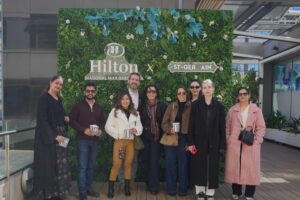
Industry access is built directly into the curriculum. Students have completed learning walks and site inspections at some of Barcelona’s leading hospitality venues, including the Mandarin Oriental Barcelona, Hilton Diagonal Mar, the Palau de Congressos de Catalunya and Torre Melina Meliá Hotels International. Guest speakers from across the MICE sector, luxury hospitality, destination management and tourism strategy join regularly to share real professional insight.
For a closer look at what the programme looks like in practice, you can read about some of the industry experiences our students have had, including our learning walk at the Mandarin Oriental and our detailed exploration of why Barcelona is the best city to study tourism and hospitality.
Questions to Ask Before You Apply
When you are researching programmes and speaking with admissions teams, a few specific questions will help you cut through the marketing and get to what actually matters.
How are students assessed? If the answer is primarily through exams and essays, that is a signal that the programme leans more academic than practical.
What industry partnerships does the school have? How are students connected to companies, venues and professionals during the programme?
What do graduates do after completing the programme? Where have recent alumni gone? Are they working in hospitality and tourism roles that match the direction you want to take?
Is there support for finding internships or work placements? At ESEI, career services is an active part of the student experience, not an afterthought.
What is the student community like? Ask about the nationality mix, average professional experience, and how students collaborate during the programme.
Taking the Next Step
Choosing a master’s programme is a significant decision, and taking the time to research properly is worth it. Visit campuses where possible, speak to current students and recent graduates, and be clear about what you want the programme to do for your career before you commit.
If the Master in Tourism and Hospitality Management at ESEI is on your list, the admissions team is always happy to answer questions and help you understand whether the programme is the right fit for your goals.
Explore ESEI’s Programmes
👉 If you’re considering starting your own journey in Barcelona, explore ESEI’s Short Courses, Bachelor’s and Master’s and MBA programmes and see how we can support you on your study abroad journey.


You may also like

How to Get an Internship in the Hospitality Industry in Barcelona