
Experiential learning; Beyond the case study
ESEI International Business School in Barcelona launches its new course in Social Leadership Training
Moving beyond the case study
“Thinking outside the box” has long been a little trite and overused as an expression, but it still means something. When faced with a challenge, one should be wary of limiting their search for the solution to within predefined parameters (which are often self-imposed). To fully explore the options available in solving a problem, or innovating an idea, one must step outside the confines of the problem itself, and break new ground. The same holds true for education. How many times have our grandparents told us that they learned everything they know in the “university of life” and not in the classroom, or that “experience is the best teacher”? They have a point, but there is more to it than that.
The classroom and the “real world” are divided by our own design as educators, as policy makers, as teachers and as students. But the divide is artificial; reinforced in Western Europe through many methodologies and ideologies which for centuries did not beckon interaction with the content in any way, but rather behaviourist reaction, memorisation and repetition. But we are moving past that, are we not?
Any business school worth its salt will advertise its use of the “case-study method” in teaching key concepts. Students apply theoretical knowledge to practical situations, to solve problems and prove that they can view these “real” situations through the prism of evidence-based thinking. But how “real” is this? The case is selected by the professor, and usually there is a solution which is expected and, however subtly, engineered towards by the professor in their facilitation of the discussion. It is a step in the right direction, and makes good use of class time in encouraging students to interact with content and spark off some cognitive and metacognitive processes, but can we go further?
Experiential learning is the missing step in the process. It is the link between education and the real world that, if done well, can perfectly complement both dimensions and fashion them into a cyclical relationship, rather than a parallel one. “Learning by doing” happens organically all the time, but by systematically building it into the learning environment, educators can help students get the best from the experiences they have.
To learn by experiencing something means that the learner makes real decisions in real contexts, using (to some extent) the knowledge and reflection from the classroom, and integrating it with other knoweldge . They can see real consequences of their actions, and truly “live” the knowledge in a way that harmonises course content with cognitive development. It is the only way to truly develop these “21st century skills” such as critical thinking which, actually, are not the province of the 21st century at all; they are part and parcel of the human enlightenment, and are simply dulled and blunted by traditional educational methods. By learning, applying, reflecting and then doing it again, we are truly internalizing knowledge and absorbing it into the framework of our developing skills and capacity.
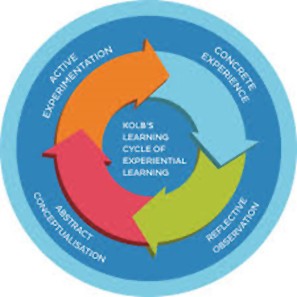 fig 1. Kolb´s cycle of experiential learning
Redefining leadership through experiential learning
Is there any Business School without leadership in the curriculum? Yet research over the last 20 years strongly indicates that this is something better learned than taught. Many disagree, and build self-reflection and communication-skills training into the subject so that it might become more personalised and thus internalized. Adding the experiential learning dimension to the way the subject is framed, is a solid attempt to step outside this self-imposed divide and reconcile the two approaches.
Say the word “leader” to a student and who comes to mind? Most likely someone at the top of the pecking order, be it politics or business. They tend to find it relatively easy to follow the theoretical division between leaders and managers, and even to identify leadership styles, but they still tend to discuss leadership as something distant, and something that will only come after years of climbing the hierarchy; not really believing (as undergraduate students fresh from high school!) that they themselves are, or can be, leaders.
In Herman Hesse´s “Journey to the East” is the oft-cited example of what is often referred to as servant leadership. Leo is a servant who accompanies a group of travellers on a journey. He helps them, entertains them, sustains them; all ostensibly within his role as a servant. Yet when he disappears, there is chaos in his absence. He was at the bottom of the pecking order, but yet was the true unifying force in the group. By widening this concept to look at what can happen when an individual´s skills, knowledge and talent are put at the service of society, in order to meet a social need, we show what is, unquestionably, leadership.
The social leadership course in ESEI
This course was originally developed by Roser Battle in ESADE Business School, and developed to meet a need identified by the generalitat de Catalunya. The educational authorities informed us that they had identified a need among high school students in catalunya for training in how to communicate through public speaking. These students have to present a final project at the end of their studies, on which a great deal of their final grade rests, and thus communicative competence was seen as a key factor in their success.
The programme has widened now, and ESEI has joined forces with ESADE and the Universitat Internacional de Catalunya to provide the service to the local community by teaching high school students how they might improve their public speaking skills in Catalan, Castellano and in English.
In ESEI, second year students of the BA (hons) in Business Studies, will begin this course in October 2015.
The course firstly looks at theories of leadership, through a process of reflection and analysis, in order to properly contextualise social leadership and service-learning methodology. Students reflect on their own experiences in communicating with others, showing leadership and facing challenges.
We then begin four key sessions on communicating in public. ESEI students have already done much training in the first year course professional and academic communication but these workshops focus not just on how to structure a presentation and communicate with empathy and clarity, but also how one might help others to understand the same principles. Think-aloud protocols are integrated into the lesson, so that students not only learn the concepts, but reflect on how they are learning them.
Next, in groups, they work over a few weeks to prepare their classes. They are only guided by the professor, and not instructed, which is critical to the process. Now, the whole project is becoming real. Students know they will shortly become the teachers, and the transformative effect of this is tangible and clear. They step out of the sometimes passive mode of being a student, and actively take their own direction. This is not a case study; the students are waiting for them in the classroom, and this is real.
ESEI students this year will deliver three workshops each semester in local high schools. As a teacher on this course in ESADE, and now the teacher of the same subject in ESEI, I have seen first-hand how this course transforms students. Those who are reticent, passive and even somewhat resistant at the start, almost without exception step up and assume the responsibility. When we return to the classroom and reflect on our experiences, watching the videos of the joys and tensions of their classroom experiences, the students are different. The feedback from these courses has always been stellar, the discussion of leadership towards the end of the course take on a new dimension as students step out of the abstract, and the community around us is made better and richer.
So what next? ESEI are committed to developing experiential learning as part of a drive to make the student front and centre of their own learning. We have many new projects in the pipeline and would love to hear from other educators who wish to collaborate in projects, or from those who have ideas, comments and suggestions to help our students in their journey to develop true awareness through their education and lead by example in the community which surrounds and sustains us.

You may also like

MBA in Barcelona vs Germany: Which Is the Better Investment for Your Career?