
The Perfect Storm or How Geopolitical Events Can Break the Global Economy
Top 5 Concerns of Geopolitical Events affecting the Global Economy
This summer after 2 years of the pandemic, my family and I were happy to enjoy some holidays on the Spanish coast in Altea and Mallorca. We were not alone! Everywhere it was very crowded and hotel occupation was around 100% at all touristic sites in Spain this year.
What also struck me was how expensive these holidays turned out to be…increased fuel prices, ferries, hotels, restaurants, etc. Still, you cannot blame people who have been sitting around for over 2 years to finally try to enjoy a relaxing holiday.
Now we are in September, and that means the return to reality. A lot of families came to the conclusion that they spent more than they thought during the holidays, but Back to School offers no relief. Inflation is high, the energy crisis is still there and with winter coming up in Europe it is probably not going to improve.
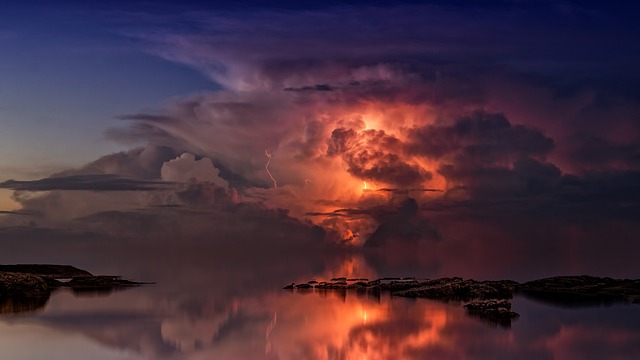
Industrial production in some parts of Europe has already fallen, and the real estate business starts to decrease due to increasing interest rates, etc., etc. Some experts are already talking about the upcoming recession…are we heading for the Perfect Storm?
So, what caused these geopolitical events?
We are living in and out of crisis since 2008 now. The Financial Crisis lasted up to 2012, and when all seemed to have gone back to normal, we were hit by the worldwide pandemic in 2019. With a lot of effort, we got over it, but some effects would last like among them here the malfunctioning of worldwide Supply Chains.
The Climate Change issue got a bit of relief during the pandemic (levels of pollution actually decreased for some time in various parts of the world!), but this effect was only temporary – look at what happened this summer. And once we got more a less over the Pandemic (in some parts of the world, like China, the Pandemic still has some moderate impact), a violent conflict between Russia and Ukraine broke out.
We all know the results of these geopolitical events:
- An energy crisis with far-lasting consequences, especially for Europe
- A food crisis with important consequences for especially North Africa and the Middle East
- A supply chain crisis (already initiated during the pandemic) with a lack of certain strategic materials, increased lead times, skyrocketing transport prices and as a result a lack of some products (think about computer chips, cars, etc.)
- A humanitarian crisis with a lot of innocent victims and refugees of Ukraine spread over Europe
- A geopolitical crisis between the west (North America and most of Europe), Russia, and its allies
The energy crisis has resulted that energy prices have gone up to unsustainable levels; in Europe, as energy is usually paid in US Dollars, and the Euro has dropped considerably against the US Dollar, the effect is even worse. Some companies are starting to lose money on production due to high energy costs. Some have already stopped working. It also means that producing whatever product becomes more expensive, meaning inflation goes up again.
To control inflation, governments increase interests which have effects on other sectors (like real estate). And climate change does not really allow us to go back to alternative sources of Energy, like coal. There is far more collateral damage from these geopolitical events, which normal humans underestimate the effects of.
Governments try to battle against these geopolitical events, but don’t forget that during the Pandemic, governments were allowed to pass their spending limits, so a lot of governments already suffer from higher debt ratios than they should have. They spend on support programs for the citizens, and some of them have given a lot of money (cash or in the form of weapons) to Ukraine to support them in their defenses against Russia, programs are being set up to help the industry. But who is going to pay the bills afterward? Hence, the idea of the Perfect Storm.
How can geopolitical events be solved?
Of course, there is no “easy” solution to these geopolitical events, and it will ask for a lot of international collaboration between countries, institutions, and the industry. But hereby some ideas:
- Obviously, the first thing that can calm this storm is stopping the conflict in Ukraine. That would indeed solve a lot of things. And it could cause the recession to be limited in time and effects. But how realistic is this? The conflict has converted itself into a hold-on war, where both parties try to keep up with the situation until one of them will surrender, and we all know that is not likely going to happen soon. How long can Europe hold on? How long can Russia stand the sanctions? If we get peace, what does this mean for Ukraine and Russia, and the rest of the world? Still, we should of course continue the diplomatic efforts to solve the conflict as soon as possible. And yes, sanctions work and may have an effect as well in the near future.
- We should try to reduce the effects on the Energy-crisis; both the EU and other nations in the world are working from one side on reducing the need for Energy and becoming more auto-sufficient, and on the other side trying to control the prices of International Energy (including gas and petrol) and enforce a faster transformation to green energy. Even more friendly nuclear energy can be a solution.
- Reduce our dependence on the rest of the world. True, we live in a globalized world, and some products are just much easier to get in faraway parts of this world (but at which price for the environment?), but at least we should look for alternatives, focus on securing the supply of strategical items, and have a plan B in case another crisis shows up or something unexpected happen.
- In the meantime, we should support the people who are most affected by the crisis and most in need. Vice President Frans Timmermans from the European Commission has a point when he calls on the solidarity principle and insinuates that the rich should help the poor (the car-free days in the 70s were for both the rich and the poor, an example of solidarity). A fiscal reform may be needed for that.
- In the longer term (this is probably not the right moment to start cutting budgets), the EU and its member countries, as well as other countries in the world should really think about how they can reduce their debts, as keeping a high debt means remaining vulnerable in times of crisis. Although some countries are doing better than others, generally governments and thus countries are way over the limit, and somewhere they have to start reducing these debts.
It’s time for a change. We should learn to live in a world in continuous transformation and learn to adapt ourselves to the new geopolitical and physical environment. The EU for instance should take lessons from the Ukraine-Russia conflict and reform itself and its politics to avoid this may happen again – maybe the time of soft power is over. People also have to learn about change and being able to handle it – something which has only recently been on the agenda of most universities and business schools. In the programme for the Master in International Relations and International Business students will get to explore this subject in The Geopolitical Environment module.
Change doesn’t come overnight. It’s something we have to work on gradually. Everybody. Little by little. I don’t know what my next holidays will look like, but I know that for many people their holidays may be very different if in-between time things don’t change. We have 10 months to go. Let’s take advantage of them.
Author Jan Jonckheere teaches in our Master in International Relations and International Business. Learn more about the programme here.

You may also like

From Belgrade to Barcelona: ESEI Master’s Student Una Jovanović on Building a Life Abroad